Project Turnkey Unified Voice
In November 2020, lawmakers approved $65 million for Project Turnkey. In June 2021, they approved a further $9.7 million to fund three properties that completed due diligence after the initial funds were fully allocated.
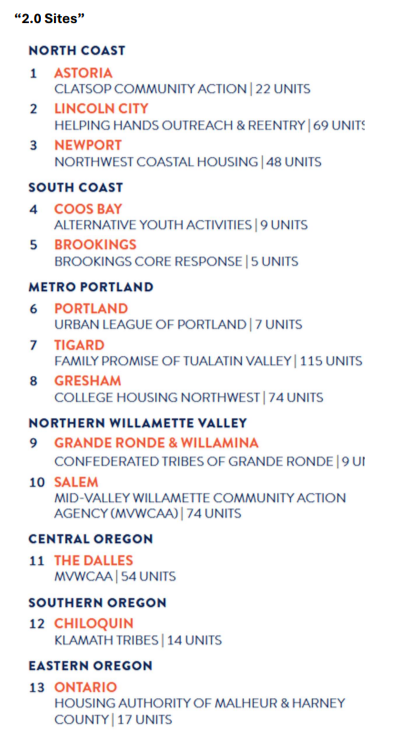
From 2021 to 2023, the Oregon State Legislature allocated a total of $125 million over two rounds for local entities to purchase hotels, motels and other existing structures to stand them up as shelter and transitional housing. Oregon Community Foundation (OCF) acted as the grant administrator for this process which resulted in 32 locally owned and operated Project Turnkey sites across the state.
In addition, OCF funded technical assistance for providers through 1:1 consultation and three in-person convenings including topics such as staffing and operations; case management; site logistics; financial management; and community engagement.
Through these learning community activities, common themes emerged including:
Connecting with peers was a valuable experience for inspiration, new ideas, resources, and ongoing support.
Sites across the state share interests and expertise, especially around building local partnerships, finding funding, and being flexible and responsive in their programs.
Project Turnkey programs have developed a reflection of both community and systems.
There are a need and desire for a unified voice among Project Turnkey providers to elevate their collective role in solving the housing crisis.
After the third and final convening, OCF sought to continue supporting this emerging community of practice and the development of a collective voice through an online format and established a monthly meeting cadence alternating focus between:
Program Management including the day-to-day operations of serving vulnerable neighbors with topics such as client and community best practices, data collection strategies, program evaluations and adjustments, operational challenges and solutions, and staff support and retention.
Asset Management including a range of topics pertinent to the ongoing funding needed to maintain the programs and buildings.
Over the course of 15-months, the network has proven to be a valuable opportunity for providers to share information, collaborate, build a community of practice, and engage in technical assistance in a way that does not exist elsewhere in the state.
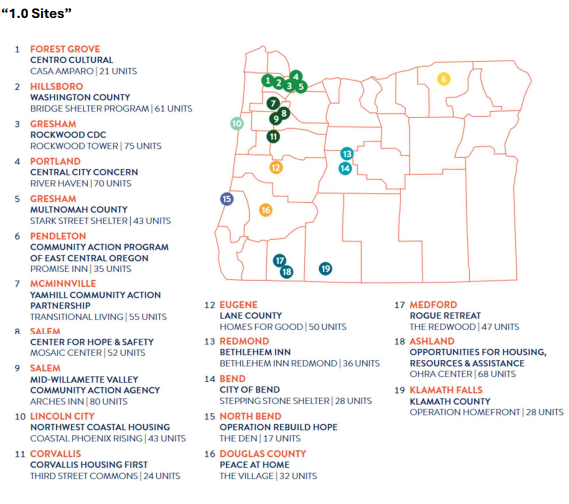
Project Turnkey Partner Sites
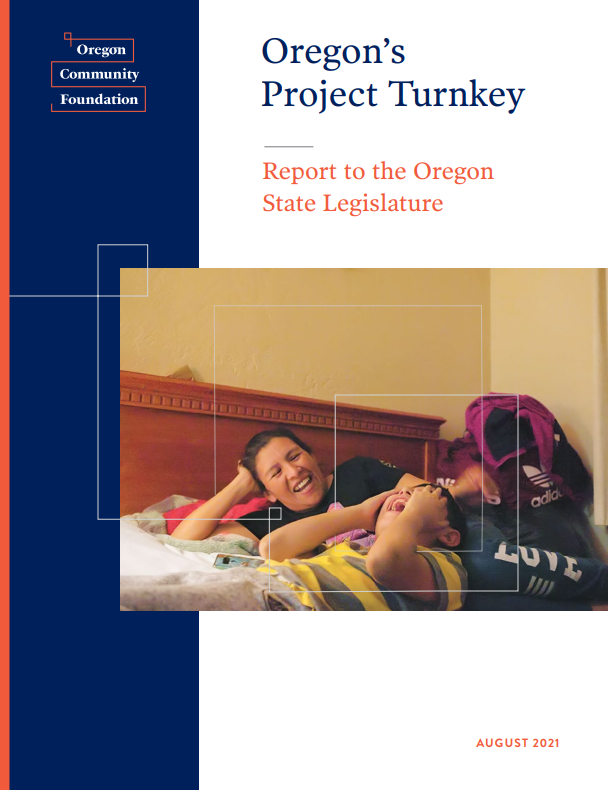
2021 Project Turnkey Report to Oregon Legislature
Project Turnkey aimed to create new temporary housing and to do it quickly and economically.
It succeeded on both counts:
• In less than seven months, Project Turnkey created 19 new shelters in 13 counties, leading to a 20% increase in the state supply of shelter beds. These facilities comprise 865 new housing units.
• Project Turnkey sites were developed for less than half (and in many cases, less than a third) of the typical cost for affordable housing. Statewide, the average cost per unit of affordable housing is $226,000. The average unit cost for Project Turnkey properties was $87,700—more than 50% less.
In most cases, the community-based organizations that own and operate Project Turnkey properties plan to convert them in two to five years to longer-term transitional housing, permanent supportive housing for people struggling with chronic homelessness, or below-market-rate apartments.